
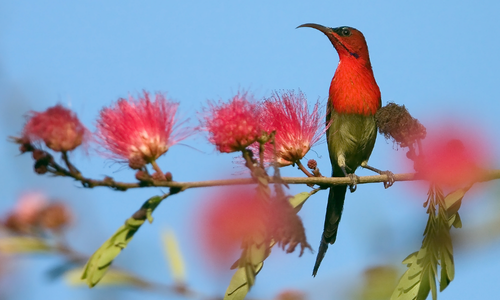
Crimson Sunbird in India: A Jewel of Nectar Gardens
The Crimson Sunbird (Aethopyga siparaja) is one of India’s most captivating small birds — a vibrant nectar-feeder that brings flashes of brilliant color to forests, gardens, and flowering landscapes. Beloved by birdwatchers and nature lovers alike, this tiny passerine is a symbol of biodiversity in tropical and subtropical regions.
What Is the Crimson Sunbird?
The Crimson Sunbird is a small passerine bird belonging to the family Nectariniidae, known for its dazzling colors and energetic behavior. Males exhibit bright crimson plumage with metallic green highlights and often a blue-green tail, while females show more modest olive-yellow tones.
Key Features:
- Scientific Name: Aethopyga siparaja
- Size: ~10–11 cm in length
- Diet: Nectar, complemented by insects and spiders
- Behavior: Agile, quick flight; can hover like hummingbirds to feed
- IUCN Status: Least Concern (stable populations)
Where Is It Found in India?
The Crimson Sunbird has a wide distribution in India, thriving wherever flowers and nectar sources are abundant. It is commonly found in:
- Himalayan Foothills & Hills of North India: From Himachal Pradesh eastwards through Uttarakhand, West Bengal, Sikkim, and into the Northeast.
- Northeastern India: Especially Assam, Arunachal Pradesh, Meghalaya, and surrounding regions with lush forests and gardens.
- Southern India: In the Western Ghats and other southern regions, although similar sunbird species may also be present as subspecies or close relatives.
- Urban Gardens & Parks: They adapt well to flowering gardens, tea gardens, coffee plantations, and orchards.
They are largely resident breeders (non-migratory) but may show minor altitudinal movements depending on flowering cycles and seasons.
Habitat and Ecology
Crimson Sunbirds prefer environments that provide plenty of nectar sources, including:
- Tropical and subtropical evergreen and semi-evergreen forests
- Forest edges, clearings, and scrublands
- Gardens, parks, and cultivated landscapes with flowering shrubs
- Plantations (tea, coffee, orchards)
Their presence is closely tied to abundance of flowers such as hibiscus, lantana, bottlebrush, and other nectar-rich blooms that sustain their high-energy lifestyle.
Diet and Feeding Behavior
The Crimson Sunbird is primarily a nectar-feeder, using its slender, down-curved bill and brush-tipped tongue to extract nectar from tubular flowers. This feeding behavior not only fuels the bird but also makes it an important pollinator in ecosystems where hummingbirds are absent.
In addition to nectar, it also consumes:
Spiders & Small insects – These protein sources are especially crucial during the breeding season.
Breeding and Nesting
Crimson Sunbirds build pear-shaped hanging nests woven from grasses, plant fibers, spider webs, and soft down. These nests are often suspended from slender branches or low bushes.
Breeding highlights:
- Breeding Season: Typically March to August depending on local climate.
- Eggs: Usually 2–3, pale and speckled.
- Incubation: Mostly by female bird for about 15–18 days.
- Both parents feed the fledglings once hatched.
Their nests are cleverly camouflaged with moss and bark, making them somewhat difficult to spot unless specifically sought after.
Behavior & Calls
Crimson Sunbirds are known for:
Fast and direct flight with quick wingbeats.
Hovering feeding behavior, though they more often perch while sipping nectar.
High-pitched calls, often described as “chee-cheewee”.
Territorial males during breeding, protecting prime flower patches.
Conservation and Importance
Though the Crimson Sunbird is classified as Least Concern on the IUCN Red List due to its large range and stable populations, habitat conservation remains vital. Protecting natural forests, maintaining native flowering plants, and reducing pesticide use all help ensure abundant nectar sources for sunbirds and other pollinators.
The Crimson Sunbird is one of India’s most beautiful and ecologically important birds — a brilliant nectar feeder that not only captivates with its colors but also plays an essential role in pollination. Whether spotted in a garden in Assam or a forest trail in Himachal Pradesh, this tiny jewel is a reminder of the vibrant biodiversity surrounding us.
Plan your unforgettable tour today with CaptureWildIndia.com
Contact: +91 8527624878
Email: contact@capturewildindia.com
Comments are closed