
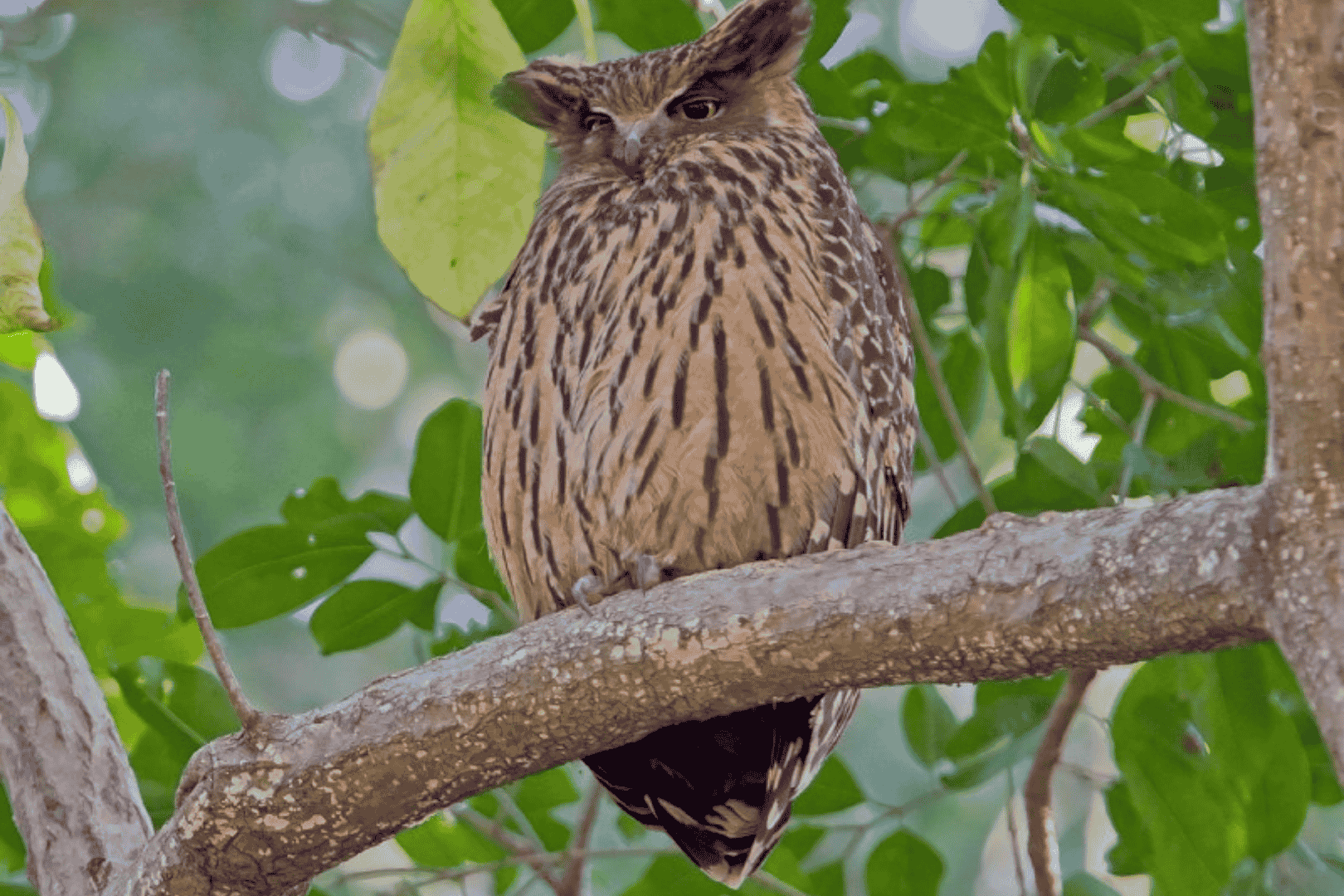
Tawny Fish-Owl in Corbett National Park – A Nocturnal Treasure of the Forest
Corbett National Park is globally celebrated for its majestic Bengal tigers, but beyond the spotlight lies a fascinating world of birds that quietly rule the forest after sunset. One such rare and powerful nocturnal bird is the Tawny Fish-Owl (Ketupa flavipes)—a true indicator of healthy forest and river ecosystems in Corbett.
Introduction to the Tawny Fish-Owl
The Tawny Fish-Owl is among the largest owls found in India, instantly recognizable by its bulky build, prominent ear tufts, and striking yellow eyes. Unlike most owls that hunt rodents, this species primarily feeds on fish, frogs, crabs, and aquatic prey, making riverine habitats essential for its survival.
In Corbett National Park, sightings of the Tawny Fish-Owl are considered special due to its elusive and nocturnal behavior.
Habitat and Distribution in Corbett
Corbett’s dense sal forests, riverbanks, and perennial water bodies like the Ramganga River create an ideal environment for the Tawny Fish-Owl. These owls are typically found perched silently on large trees near water sources, scanning for prey during dusk and nighttime hours. Their presence reflects:
- Clean water systems
- Rich fish population
- Mature forest cover
- Mature forest cover
This makes Corbett one of the best places in North India to spot this magnificent owl.
Physical Characteristics
The Tawny Fish-Owl stands out due to:
- Large, heavy body with buff and brown streaked plumage
- Strong talons adapted for gripping slippery prey
- Distinct ear tufts giving it a fierce, alert expression
- Deep, resonant calls heard mostly after dark
Its camouflaged feathers allow it to blend seamlessly with tree bark, making daytime sightings extremely rare.
Behavior and Diet
Unlike many owl species, the Tawny Fish-Owl:
- Hunts near rivers and streams
- Feeds on fish, reptiles, amphibians, and small mammals
- Is mostly active during twilight and night hours
- Remains solitary or seen in pairs during breeding season
Birdwatchers often rely on its calls rather than visual sightings to locate it.
Importance in the Ecosystem
As a top nocturnal predator, the Tawny Fish-Owl plays a vital role in:
- Maintaining balance in aquatic ecosystems
- Controlling amphibian and fish populations
- Indicating the health of forest-water interfaces
Its decline can signal environmental stress, making conservation efforts crucial.
Birding and Photography Opportunities
Corbett is a paradise for bird photographers and wildlife enthusiasts. Capturing the Tawny Fish-Owl requires patience, ethical birding practices, and expert guidance. Night safaris, nature walks, and specialized bird tours offer rewarding experiences without disturbing the species.
Conservation Status
Although currently listed as Near Threatened, habitat degradation and water pollution pose long-term risks to the Tawny Fish-Owl. Protected landscapes like Corbett play a critical role in ensuring its survival.
The Tawny Fish-Owl is one of Corbett National Park’s most fascinating yet underrated avian residents. Silent, powerful, and deeply connected to forest waterways, it represents the hidden wilderness that thrives beyond daylight hours. For bird lovers and wildlife explorers, spotting this owl is nothing short of magical.
Plan your unforgettable tour today with CaptureWildIndia.com
Contact: +91 8527624878
Email: contact@capturewildindia.com
Comments are closed